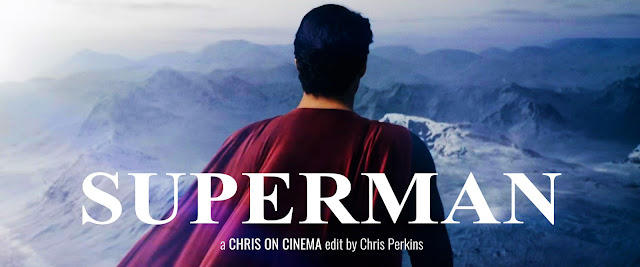
[UPDATE 8/27/2017: New, working video link below! Please note: to watch videos in their entirety, download the video to your computer. Streaming from Dropbox will only allow you to watch the first 60 minutes.]
A Zack Snyder film is like that college freshman who got a little too into Ayn Rand his senior year of high school, has taken one Intro to Philosophy course, one Intro to Political Science course, and is now writing a manifesto. You know all of this because when he walked into your English class you said “Cool trench coat” and he mistook your derision for interest and now he won’t stop talking at you.
Zack Snyder’s films won’t stop talking at us and so, apparently, they’re here to stay. When I was a senior in high school, I defended Watchmen as a bold but fitting adaptation of a ground-breaking graphic novel. I thought it was very cool.
Now I’m just tired.
In this installment of Lessons from the Edit, we’ll take a look at Snyder’s first entry in the troubled and tone-deaf DCEU: Man of Steel.
I remember being very perplexed by the news that Christopher Nolan would produce (and, implicitly, oversee) a film directed by Zack Snyder. Nolan’s Dark Knight Trilogy felt like a fresh take on the superhero genre by treating it like a grounded, crime film. The Dark Knight clearly wants to be a Michael Mann film and blatantly steals from Heat. Zack Snyder has spent his career doing the exact opposite.
300 and Watchmen, whether or not you consider them successful or good, found interesting ways to translate the visual media of comic book graphics into audio-visual media of film without feeling derivative (see Ang Lee’s Hulk for that). A meeting of Nolan and Snyder’s worlds seemed incomprehensible. And it sort of was.
Man of Steel is like Michael Bay on downers. It’s still all American flags and muscle but the 2013 film feels like something Bay would make while on Xanax as opposed to (and I’m just speculating here) his usual cocaine. This is undoubtedly due in part to Snyder’s cinematographer, Amir Mokri, who book-ended his work on Man of Steel with two Transformers movies and was the DP for Bad Boys 2back in 2003.
Snyder trades in Bay’s kinetic maximalism for handheld wobbling in dialogue scenes and extraneous snap-zooms in CGI-heavy action scenes. If a Michael Bay film is a haywire roller-coaster, Man of Steel is like being in a small boat on choppy water. It’s a sea-sickness simulator. If the camera movement alone isn’t enough for you, Snyder kindly included plenty of teal/grey color grading so that everyone in the movie looks as sick as you feel.
The film’s look can probably be chalked up to Zack Snyder knowing he needed to depart from his previous, and now rather clichéd, style of inky blacks and time-ramping. So, credit where it’s due: at least Snyder was trying something – even if it was just extreme close-ups on farmhouse paraphernalia. That’s more than can be said for the aggressively bland visuals in the Marvel movies. Still, the direction in Man of Steel can be broken down into two basic parts: the boring first half and the migraine-inducing second half.
The one scene that I was pleasantly surprised by in preparing for my re-edit involved Russell Crowe’s Jor-El explaining to Clark where he came from and what happened to Krypton. It’s a simulated long-take wherein the camera glides from Crowe to Cavill to the graphite-colored bas-relief sculptures that are interesting enough to look at, if a bit cartoony. This brief moment has fluidity and rhythm and feels purposeful even though it’s all exposition that, in the theatrical cut, the audience already knows because they saw it in the beginning of the movie.
In an earlier scene, Clark is talking to his Earthly father, Jonathan Kent, at an old pickup truck in another relatively long take but here it is understandable why the first half of the film just seems to drag: nothing is happening. We linger on scenes of Pa Kent doggedly trying to convince his son not to become the superhero we all know he will be. These scenes could have been used to build up an actual relationship between young Clark and his dad so that Jonathan’s eventual death might mean something to us. Because here it doesn’t. These characters don’t feel like they have inner lives – they’re clunky conduits for haughty monologues.
Despite the fact that none of the characters are compelling or three-dimensional, the cast is full of highly talented actors who all seem to be trying their best. And also Henry Cavill. Amy Adams, Michael Shannon, Laurence Fishburne, Kevin Costner, Diane Lane, Russell Crowe – they’re all perfect for their roles, in theory, but they’re reduced to doling out lame speeches and hacky expositional dialogue. Whenever Amy Adams does a damsel-in-distress style scream I feel embarrassed. I’m embarrassed for Adams, who is wasting her time filming this trash, and for all the people who inexplicably think this is a quality film.
Henry Cavill is not good in this movie. Let me rephrase: of all the terrible lines by all the uninteresting characters in this movie, Henry Cavill’s are the least convincingly acted and he is the least interesting performer to watch. Let me rephrase: why was Henry Cavill cast in this movie? Is it because he’s buff? Because basically anyone could be buff if they trained (I’ve always felt that Superman doesn’t really need to have a bodybuilder’s physique anyway, but I don’t want to get into that right now).
If it were up to me, Superman would be played by James Wolk. In his role as Bob Benson on Mad Men, Wolk is the kind-hearted, loyal boy-scout that a superman should be. He has a combination of warmth and strength that doesn’t have to be cheesy or campy if you write it well enough. But there are plenty of people who could play Superman. There are plenty of people who can act. Henry Cavill is not one of them.
Also, whoever did his wardrobe should be fired. Granted, Henry Cavill looks good in the Superman suit but in the scene where Lois meets Clark in the cemetery it looks like Clark has never worn clothes before. Like, his pants and shirt are super baggy and he’s wearing a baseball cap really awkwardly. I guess it’s a “disguise?” Or they were trying to hide how muscular he is? Whatever, I’m getting off topic.
The craziest thing about Man of Steel is that it’s better than Batman V Superman. In Man of Steel, it’s at least clear why characters are doing what they’re doing. The story is pretty simple and character motivations are relatively logical within the context of the film. That’s much more than can be said for BVS. Because, in short, no: a movie is not good just because “Batman had a scene where he was cool in it.” You’re a child. That’s a bad argument.
More importantly, watch BVSand then watch Man of Steel again and try to tell me it isn’t the most blatant invocation of retroactive continuity you’ve ever seen. The last shot of Man of Steel is Clark Kent smiling.
Let me repeat: the last shot of Man of Steel is Clark Kent smiling.
At the time, it felt incredibly tone-deaf that the last scene was so chipper after we just witnessed an hour of cataclysmic destruction but now it just feels strangely quaint and innocent. It seems pretty clear that “Superman Goes to Court” was not the original plan for a Man of Steel sequel and was only a result of the outcry against the gratuitous destruction.
The main impetus for my edit of Man of Steel was the removal of all of that mind-numbing “action” where the characters turn into rubber and Zack Snyder gives up on composing interesting, or even discernible, shots. Furthermore, nothing is learned from these scenes other than plot points to be checked off. Superman doesn’t grow or change throughout the course of the fight and Zod is as hell-bent on his dastardly plan in the end as he was in the beginning. In reading the comments on my Rogue One edit I learned that some people just don’t care about character development. That’s insane to me but it also completely explains the current state of big-budget cinema and why people like something so insultingly dumb.
My other goal, and the most time consuming element, for this edit was fixing the color. Snyder shot Man of Steel on film. There’s a richness and a texture buried underneath all the bland, sickly desaturation that the Marvel movies will never achieve with their cheap, digital shooting. Lots of people have re-saturated the “Superman Flight” scene on YouTube – I tried to carry that through the whole movie and, honestly, I may have overdone it in a few places.
So here it is, Superman: a Chris on Cinema edit: https://www.dropbox.com/s/al3u8hynubs6jdy/SupermanMOS.mp4?dl=0
(NOTE: You need to have one of Dropbox’s paid accounts to stream more than the first hour of the video but you should be able to download the video in its entirety. I’m currently trying to find a better streaming platform.)
Let me know what you think! Not really about Man of Steel (I’m sick of even looking at the film at this point) but about my edit in relation to it. So sound off: is it better? Is it worse? Would you like to hear a commentary track where I go into more detail about everything I cut? What’s another flawed or good-but-frustratingly-not-great movie that you’d like to see an edit of?
Next time on Lessons from the Edit: a movie that didn’t really need my help in the first place.
Before you download “Superman” please pay for a copy of the original film. “Man of Steel” is a Syncopy Production presented by Warner Bros. Pictures in association with Legendary Pictures. Directed by Zack Snyder with music by Hans Zimmer. Based upon “Superman” characters created by Jerry Siegel and Joe Shuster published by DC Entertainment.

 CHRIS ON CINEMA