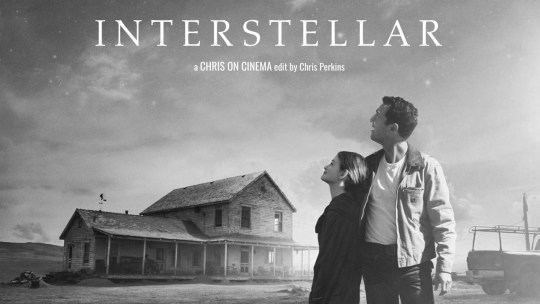
Attention: This post contains INTERSTELLAR spoilers. The attached video is provided for educational purposes
under the assumption that the viewer has purchased a copy of the film itself.
Please support creators, copyright holders, and their content.
I was going to begin this piece with my own take on Martin
Scorsese’s recent comments about Marvel movies being closer to theme park rides
than cinema and how Christopher Nolan seems to be intentionally threading that
needle: describing his most recent (and best) film, Dunkirk, as “virtual
reality without the headset.” I guess you could argue I’ve done that. Let’s
move on.
Consider, if you will, the tesseract. Much more than a
glowing blue MacGuffin in Marvel movies, a tesseract is the dimensional
successor to a cube just as a cube is the dimensional successor to a square. A
recursive projection of itself possible only in four-dimensional geometry. Germane
to our discussion in numerous ways, we find four-dimensionality in film. In
fact, this writer would argue that film is one of the only four-dimensional art
forms.
While anyone who actually understands science will tell you
that the fourth dimension is not “time” itself, for our purposes we can say
that time is one of the main components of four-dimensionality. Where sculpture
and architecture are three-dimensional objects contained in time, film
(and, to provide another example, performance art) contains time. A
sculpture is static, a performance unfolds. Both the internal narrative
and the external structure of film require the utilization of time.
Were one to note the main structural fixation repeated in
the films of Christopher Nolan, it would surely be time. Inception
explores the worlds within different scales of time; Dunkirk re-orchestrates
the linearity of time; and Interstellar, in its climax – to (literally)
return to the tesseract – utilizes recursive temporality. Time folds in on
itself. It is fitting, therefore, that such self-reflexivity would play a part
in my own relationship with Interstellar.
From my first viewing, Interstellar felt like both
the best and worst thing Christopher Nolan had ever done. Putting to rest his
Batman trilogy with a belabored ambivalence (do note that the most interesting
aspect of The Dark Knight Rises is surely the IMAX-visualized
Police-blitz climax – a concept taken to its logical conclusion in Dunkirk
– but that’s a story for a different post), Interstellar seemed to
contradict itself as Nolan attempted his most human and his most story. Unfortunately,
but perhaps not surprisingly, some of the human elements fell flat to me.
“The answer is simple,” thought a younger me, recently
introduced to the video editing capabilities of Adobe Premiere Pro. “Remove
Jessica Chastain’s scenes from the film and you will have a cleaner, leaner
film wherein the audience will more fully join Matthew McCounnaughey in his
separation from his most beloved child.” And so, I went about working on my first
ever fan edit, losing steam at 90% completion, abandoning it for other
projects for two years, only to return to the project and realize that the only
version of the file I had was corrupted – unable to be opened, salvaged, or
restored.
Two years after that, I, for whatever reason, felt ready to
return to the project – re-editing the film from the ground up, resulting in
the project that exists before you. Learning much along the way, as one does, I
am happy now that I did not complete the project back in 2015. Not only am I a
better editor today, I also have a new understanding of what troubled me with
the film.
I still believe that the Affleck/Chastain “leaving the farm”
storyline is an attempt to make a dramatic mountain out of a narrative molehill
and is probably the least effective cross-cutting that Nolan has ever attempted
because the stakes do not align whatsoever. In this way, I have kept to my
original conception of what the film’s main structure should be. This time,
though, I also reconsidered the ending of the film. Cooper “returning” to an
unrecognizably old Murph (on her deathbed, for like 30 seconds) is narratively
tidy but emotionally false – missing what I believe to be the most interesting
and moving idea in the film.
“Newton’s third law,” Cooper says, over the film’s best
music cue, “You’ve got to leave something behind.” To this point, the film has
trafficked heavily in the concepts of separation and isolation. Cooper leaves
his family behind. Dr. Mann and the other Lazarus astronauts leave Earth and,
potentially, humanity behind. In nearly all of the cases presented, this ends
in tragedy. Murph resents her father for leaving and Dr. Mann, in his
isolation, grows fatally selfish.
It is not until Cooper enters the Tesseract that he learns how
to productively leave something behind. That is, to impart rather than
to abandon. In this way, the film becomes a lesson in the struggle of parenting.
Cooper must finally accept that the universe has not chosen him; it has chosen
his child. Like many aging parents, he gives up his attempts to regain the past
and works to pass on what he has learned. Not for his own benefit, not
even for the benefit of his relationship, but for the express benefit of his
child – emboldening her to do what only she can do. We move forward not by
leaving others behind, but by what is left behind for us. We progress as a
society through collective, communal, charitable effort; not through the
Randian elitism that Dr. Mann employs which can only end in self-destruction.
Still, as in all things, we learn more in retrospect than we
ever can in the moment. Murph can’t crack the meaning behind her ghost’s
messages as a child. She learns in the returning. In the reflection. What do we
say heals all wounds? Only riding out the wave of time. Murph has a profound,
extra-temporal connection with her father that she can only understand,
appreciate, and utilize as an adult. It was through the Tesseract that Coop
gave his daughter all the time he could.
In a similar way, we access higher dimensions through memory.
Memory allows us to hold, in some small way, time: that slippery thing that
contains us. It gives us access to the ghosts of our past that live behind our
bookshelves and inside our keepsakes. It is fitting that Murph’s is a
timepiece. This is, after all, a Christopher Nolan film.
So as not to spoil the experience, I will leave it there.
And I’ll leave this here: INTERSTELLAR: a Chris On Cinema Edit
Please note: video resolution in Google Drive is dependent upon your browser settings and internet connection. If 1080p is not available, try downloading the file.

 CHRIS ON CINEMA