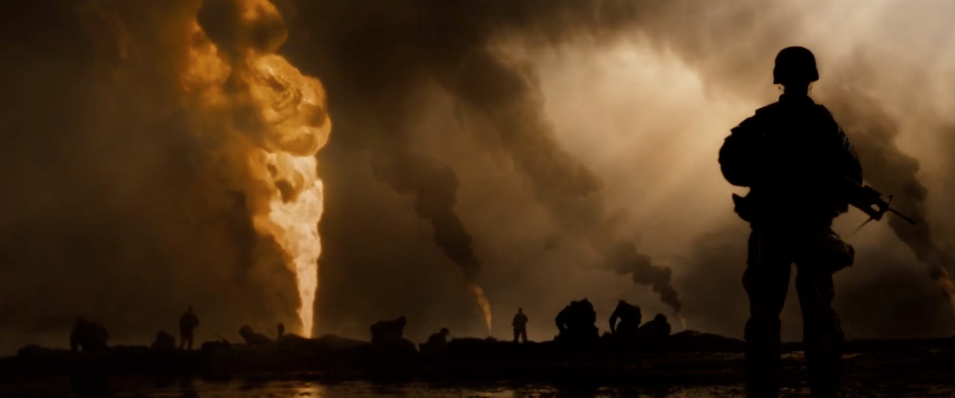
Roger Ebert once said that to simply watch the visuals of a Martin Scorsese film would be just as effective as the experience of the standard audio/visual combination. The same could be said of any film shot by master cinematographer Roger Deakins. From the white-washed landscapes in Fargo to the dazzling palette of Skyfall, few of contemporary cinema’s most iconic shots would exist were it not for Deakins. Enjoy, as I did, this supercut of some of his best work (after the break, courtesy of Plot Point Productions) and stay tuned for my review of Steven Knight’s Locke coming soon!
Category: Uncategorized
Counterpoints and Condescension: on Michael Bay’s “Transformers: Age of Extinction”

I respect Michael Bay as a filmmaker and I’m intrigued by how defiant it feels to make that statement. I went into my friendly, neighborhood multiplex with an open mind to see Transformers: Age of Extinctionand I was pleasantly surprised with what I found. While undoubtedly flawed, Bay’s new Hasbro cash-grab is the best of the franchise, improving on the previous Transformers movies in almost every way.
Age of Extinction replaces Shia LaBeouf and his whiny teen-drama storyline with Mark Wahlberg and a melodramatic father-daughter storyline. Right off the bat, I have to commend Bay for completely disregarding LaBeouf’s Sam Witwicky—providing not even an allusion to the character’s existence. I only wish we could all do the same with the actual Shia LaBeouf. Beyond that, all you need to know about the plot is that this is a Transformers movie.
Actually, that’s all you need to have in mind the entire time and you’ll be fine. Is there cheesy, clunky, expositional dialogue? Yes. Is the first act slow-moving and full of “jokes” that audiences won’t laugh at unless their friendly, neighborhood multiplex serves alcohol? Of course. Yet through the din there is an inkling of maturation in Bay’s direction.
As the longest Transformers movie to date, Age of Extinctioncould certainly use another pass in the editing room but it also boasts the most succinct, straightforward storyline, the cleanest action, and the least misogyny and awkward innuendos of all its predecessors. I predict that by Transformers 6 we might actually have a fully coherent movie. Unless he decides to backpedal into his more familiar mayhem.
Writing for Collider.com, Matt Goldberg proclaimed Bay’s films are “not for people who watch movies for a living; they’re for people who want to ‘turn off their brains.’” In his condescension (presumably while listening exclusively to classical music), Goldberg forgets that there are as many types of movies as there are people to view them. Some films are meant to be immersive and some are meant to be escapist but both have the potential to be fulfilling or pointless. Jonathon Glazer’s critically hailed Under the Skintries very hard to be immersive but I found it even less engaging than Age of Extinction.
Glenn Kenny, writing for RogerEbert.com, referred to Age of Extinction as “infantile.” No arguments there but have we forgotten this franchise is based on (and produced by the makers of) a series of plastic toys? I praise its infantile nature. Finally we have a Transformers movie that isn’t so full of F-bombs and gratuitous sexiness you’d be embarrassed to watch it with your children.
Age of Extinction features Optimus Prime riding a robotic t-rex, carrying a flaming sword and squaring off against a Transformer that turns into a Lamborghini and has a gun that comes out of his face. HIS FACE. Take a moment to let that sink in and I dare you to tell me the idea doesn’t delight you. If you can take a step back and appreciate Bay’s film for what it is, then it is an utterly rewarding ride.
Glenn Kenny ended his review with this quote from the New Testament’s Book of Corinthians: “When I was a child, I spake as a child, I understood as a child, I thought as a child: but when I became a man, I put away childish things.” I’d like to counter with a quote from Matthew: “Truly, I say to you, unless you turn and become like children, you will never enter the kingdom of heaven.”
If you can’t revel in the colorful cacophony that is Age of Extinction then perhaps you can find something more fulfilling to do. Maybe light up a cigarette and enjoy a Broadway show.
A Preemptive Obit for Rian Johnson: Slain by Disney
Rian Johnson is reportedly set to write and direct Disney’s Star Wars: Episode VIII. Hit the jump for my thoughts.
The maxim of contemporary entertainment states that TV is the new cinema. If this is true it is because of the steady decline in momentum within the film industry after the golden age of the 1970s. There are still a handful of talented, seemingly passionate, filmmakers working today (we’ll get to one in particular) but overall it seems the studio system and the general ease of modern production have led to lackadaisical filmmaking both within and without the major studios.
All of the above negativity is what made watching anything from Rian Johnson’s flawless (albeit brief, to-date) filmography such a pleasure. It is exciting to watch one of Johnson’s films because it feels like he is excited to make them. His three features—Brick, The Brothers Bloom, and Looper—all have a lot in common: they’re genre pieces, they feature (to some extent) Joseph Gordon Levitt, and, most importantly, they are completely immersed in the worlds Johnson places them in. From visual style to dialogue, every piece fits into the larger picture that is inevitably a fun and fulfilling film.
All of the above positivity is why I was less than enthused when I read the news that Johnson would be directing Disney’s Star Wars: Episode VIII. Admittedly, Johnson is a perfect fit for the film: he’s proved he can make a fresh, engaging sci-fi film, he has worked incredibly well with young actors, and even the energy and enthusiasm that runs through his work is reminiscent of early Lucas or Spielberg. And yet, I can’t help feeling that Johnson shouldn’t waste his time with Disney’s Star Wars.
It’s a selfish notion on this writer’s part to suggest that a talented, independent filmmaker should forego one of the largest, most successful franchises in the history of film. Yes, Johnson will presumably get a big paycheck but he’ll also get insane international recognition and resources that he may not have been able to afford before. But Disney doesn’t need him. JJ Abrams has been a derivative Spielberg Jr for years now but Johnson seemingly still has decades of independent, creative energy in him. Disney, the great studio parasite, could easily latch onto that and never let go. Or at least not until they’ve made their money or Johnson loses steam. The sad truth is that too many great filmmakers went through the shiny doors of Big Studio and were never seen or heard from again.
Star Wars is important to me. It represents the adventurous naiveté of childhood—of my childhood. Rian Johnson’s films recall that same fantastical fervor. But George Lucas, the Star Wars franchise, and Disney, for that matter, gave up on making meaningful content a long time ago.
To Disney: Please don’t destroy one of my favorite directors. He’s too good for you.
To Rian Johnson: I hope you somehow breathe new, creative life into cinema’s most tired and uninteresting franchise. You just became the leader of a rebellion that the rest of us gave up fighting years ago. As it stands, you’re our only hope.
Low Lifes: James Gray’s “The Immigrant”
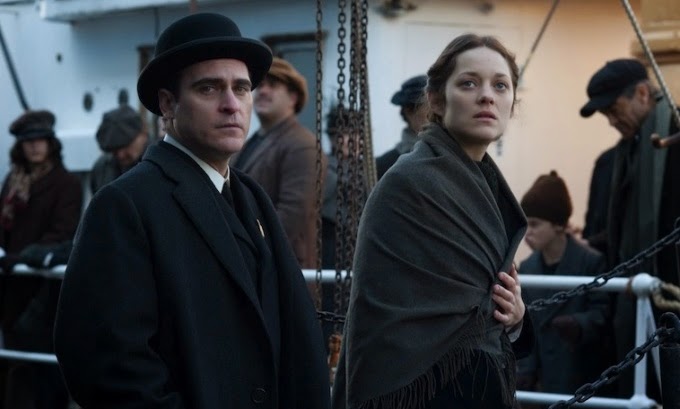
January, 1921 is snowless but perpetually bleak in—I’m sorry, let me start over. James Gray’s The Immigrant would be this year’s winningest film for the religious Right were it not for all of the topless women. There. Do I have your attention? A story of desperation, tribulation, and salvation, Gray’s new film is full of pathos and careful camerawork but the whole never quite equals the sum of its parts.
Despite some of its eventual fumbling, The Immigrant’s first act wastes no time getting the ball rolling. We meet Ewa (Marion Cotillard) and her sister Magda (Angela Sarafyan) as they first arrive on Ellis Island. The latter is quickly quarantined for possible lung disease while the former is flagged as a “woman of low morals” for an altercation on the ship to America. Luckily, the mysterious, brooding Bruno (Joaquin Phoenix) finds our damsel in distress and swoops in to save her. Brutish and manipulative though he is, Bruno gives Ewa a place to stay and thus she, with seemingly no other options, becomes indebted to him. And all that in only the first 10 minutes!
To help Ewa earn enough money to release Magda, Bruno lets her dance at his theater and work at his brothel which is conveniently located down the hall from his own apartment. Things get more complicated with the return of Bruno’s cousin Emil (Jeremy Renner), an idealistic magician who sets his sights on the pure-hearted Ewa much to Bruno’s chagrin.
The Immigrant’s strongest asset is undoubtedly the casting of the three leads. Who would have thought that Jeremy Renner, who played a cardboard cutout of the B-list Avenger, Hawkeye, would have such genuine on-screen chemistry with Marion Cotillard? Renner’s appearance in the second act of Gray’s film is a breath of fresh air after a rather paint-by-numbers opener.
Joaquin Phoenix is boorish as ever with his signature schizophrenic baritone swinging violently from whine to growl not unlike his character who, at any moment, may fall into a fit of rage or lend a compassionate hand to Ewa who he quickly (and predictably) falls in love with. Yet even Phoenix, an increasingly consistent actor who one almost assumes will steal any scene he’s in, is no match for the empathetic power of Marion Cotillard. In another life, Cotillard was surely a silent film star. An obvious inspiration for this role, which was written specifically for her, is Renee Jeanne Falconetti in Carl Dreyer’s The Passion of Joan of Arc. James Gray wisely allows the camera to linger on her large, emotive eyes. Work smart, not hard, as the saying goes.
Yet therein lies the problem. Though the narrative is almost exclusively set from Ewa’s point of view, the film, like the two-faced Bruno, never figures out what it wants to be. The aforementioned nudity and the original title of the film, Low Life, suggests a gritty realism that perhaps Gray or the studio didn’t feel comfortable going all the way with.
No two characters share a kiss, let alone a bed, in The Immigrant which is rather shocking considering this is a film about a reluctant prostitute (is that redundant?). Christopher Nolan, one of the few directors in Hollywood who seems completely uninterested in sex, even has a more provocative scene in The Dark Knight Rises with Cotillard and Christian Bale lounging in front of a fire. I’m no proponent for gratuitous, on-screen sex but for a film that tries so hard to illustrate the desperate measures of a desperate time in American history, Ewa’s implied actions carry almost no emotional weight.
Gray’s film could easily be compared to Tom Hooper’s messier but equally operatic Les Miserables. Stacked against each other, The Immigrantis undoubtedly a better film yet perhaps the best possible, hind-sighted scenario would have been to have Gray direct Les Miserables. Perhaps his more nuanced direction would led to more nuanced performances since the stories themselves are fairly similar: Christ-figures do no evil and characters inexplicably fall in love because that’s what characters are supposed to do! Joaquin Phoenix could even play Javert to save both Russell Crowe and the audience the embarrassment of hearing him sing. But I digress.
What we are left with is a film that dreams of being The Godfather or Steve McQueen’s 12 Years A Slave but is actually closer to a saccharine Spielberg morality tale. “There’s no art without risk,” Gray recently said in an interview, citing Francis Ford Coppola. If this is true, then The Immigrant is no work of art. If Gray had gone to Sunday school he’d know, as his film ponders, that it is not a sin to be a lowlife, only to be lukewarm.
Felix Van Groeningen’s “The Broken Circle Breakdown”
“Time is a flat circle.” The infamous phrase courtesy of Matthew McConaughey’s nihilistic Rust Cohle in HBO’s True Detective, like the show itself, failed to resonate with audiences as anything more than pop-culture fodder. Cohle’s metaphysical musing find a fitting (and much more engaging) partner in Felix Van Groeningen’s Oscar-nominated film The Broken Circle Breakdown. Compelling, warm, and textured, the film is everything True Detective was not—and then some.
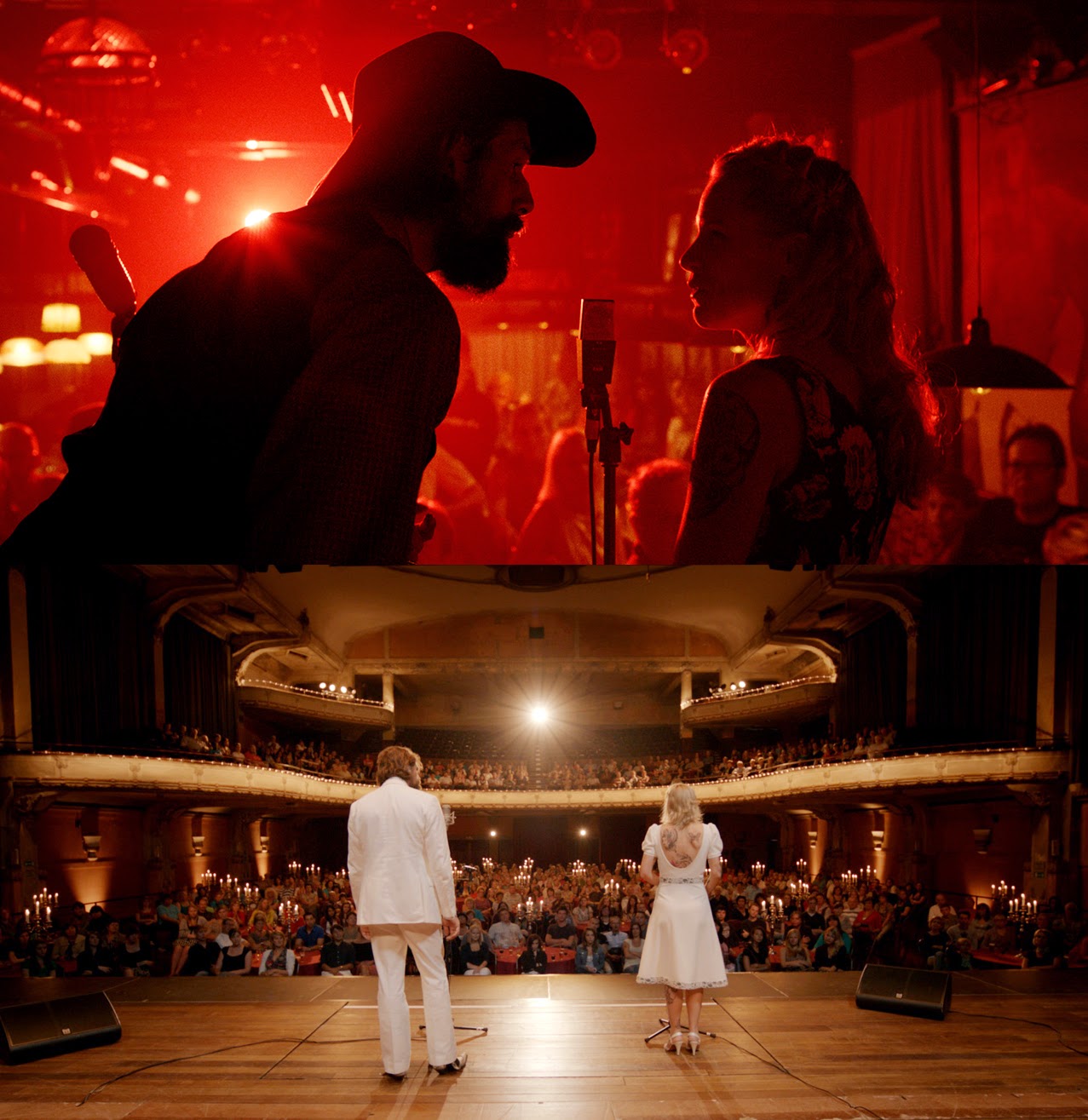
“Will the circle be unbroken/By and by, by and by/Is a better home awaiting/In the sky, in the sky?” The musical number that opens Goeningen’s Bluegrass-marriage drama sets the scene both sonically and thematically for all of the aptly-titled film. Sliding back and forth through time we meet Didier (Johan Heldenbergh): a passionate Bluegrass musician who dreams of America—the land of second chances—and his lover Elise (Veerle Baetens): a free-spirited tattoo artist who boldly tells her life-story through the ink in her skin. We see them court, fall in love, get married, have a kid, suffer losses, and fall out of love. Though never in that exact order.
Beautiful, bittersweet, and melodic though it may be, the cross critics (perhaps unappreciative of the many Bluegrass interludes in the film) could easily point out some of Breakdown’s more glaring contradictions. Didier romantically describes America as the place where anyone can find a second chance yet we quickly find that he does not really believe in second chances at all. Didier believes life is one singular chance and for that reason you must fight for what you have and what you love. If any character should be waxing about second chances it is Elise. She lives with an air of impulsive impermanence. Quickly covering her body in the names of her lovers only to cover them up if it doesn’t work out. Anything can be covered up and changed. One can always move on. The understanding viewer will surely see these contradictions as part of what make these characters seem so fully human.
Many parallels can be drawn to Derek Cianfrance’s 2010 filmBlue Valentine starring Ryan Gosling and Michelle Williams. Bluegrass and Belgian setting aside, the two movies tell a similar story in a similar way. Yet somehow Heldenbergh and Baetens make Breakdown feel larger. Sure, there is more spectacle, more mysticism in Groeningen’s direction but that isn’t all. Baetens (who won multiple awards for her chameleonic performance) would outshine both Gosling and Williams combined who, in comparison, seem more like children acting out than complex adults. Even if that is only a result of the darker subject matter that Breakdown occasionally reaches for through its unchronological conquest.
In many ways, Breakdown answers its own question regarding the fateful circle. Afterall, the film is not called “The Circle” or “Will The Circle Be Unbroken?” We are aware from the outset that things will indeed fall apart. The nonsequential narrative structure only emphasizes this. Yet the film never feels like Rust Cohle’s existential funeral dirge of Time as a flat circle. Rather, we find that the circle urges us to press forward. Even when the stage is too large and the performance no longer feels intimate, the song must play on. In this way, the much less pessimistic words of Walt Whitman’s Leaves of Grass come to mind: “All goes onward and outward, nothing collapses, And to die is different from what any one supposed, and luckier.”
An American dream if there ever was one. Didier would approve—as long as the leaves of grass are blue.