Bright Eyes, Dim Wit: Richard Linklater’s “Boyhood”

“When I was a child, I spoke and thought and reasoned as a child. When I grew up I put away childish things.”
                                                                                                                                
                                                                                                                                 -1 Corinthians 13:11
Imagine your neighbors invite you over to watch their home movies. Politely, you will agree to spend a few hours as a spectator of the lives of people you recognize but do not know. Like all home movies, theirs will begin with milestones—birthdays, holidays, weddings, etc.—but will meander and devolve until you’re only watching Uncle Frank’s shoes because he forgot he was holding the camcorder. Add some clunky, unnatural dialogue and you have Richard Linklater’s Boyhood: a film with a powerful, intriguing concept that ultimately fails in its execution.

For those unfamiliar, Boyhood is a coming-of-age story that was shot intermittently over 12 years with the same cast. I entered the movie theater to see Boyhood with high hopes but low expectations. Initially, I was charmed by the “period” soundtrack, the late-90s paraphernalia, and the bright-eyed Mason Jr. (Ellar Coltrane).  Boyhood, as many have described, is like a time capsule. It is fun, at first, to dredge up the objects and images that once defined us. In this way, Linklater does an impressive job of revealing Mason as he grows. At the start of each implied vignette we begin to notice the small changes in appearance that mark growth and age. It is important to note that these moments are the most subtle and also most effective portions of the entire film (and that they would occur simply by the nature of the concept, regardless of the director).
Unfortunately, the rest of Boyhood’s near 3-hour running time is uncomfortable and, worse, uninteresting. As Mason and his sister Samantha grow, their kid-acting becomes less endearing and more distracting. Even less forgivable is their mother, played by Patricia Arquette, who always seems to be reading from a script like an unprepared host on SNL. In fact, all of the dialogue feels like an over-written recitation from the actors and an under-written anti-statement from Linklater.
Characters struggle to guide and advise Mason through his formative years with clichés and rambling diatribes that amount to little. Mason himself grows into a vapid, philosophizing teen which is only slightly more excusable. After all, it is the teenage rite to believe one is smarter and more aware than everyone else. Yet this doesn’t seem to be a theme Linklater is trying to point out; it is merely something he stumbled upon that, like Uncle Frank’s shoes, happened to end up on film.
This is perhaps the greatest summation one can make of Boyhood: it strives for naturalism but is only vacuous. Intentionally or not, it says very little. In this way, it is less of a time-capsule and more of a Rorschach test. Anything one pulls out of the film is only a projection that the film itself, vaguely shaped as it is, did not put in.   

One might argue that all of this is intentional. Matt Zoller Seitz argues, “the movie’s constant (if empathetic) critique of American manhood, or what passes for American manhood: an entitled mental state that is really just boyhood with money and a driver’s license.” This would be an acceptable explanation if the film centered on Ethan Hawke’s Mason Sr. (which would have been a good idea considering his is the only performance that feels natural, watchable, and seems to have a purpose) who enters the film as a displaced ex-husband, caring-but-distant dad, and clichéd man-boy.
It is true that Mason Jr. is devoid of passion, drive, and intelligence (not to mention personality). But the film is not perceptive or intuitive enough to make this interesting let alone a critique and thus, at best, it is the theme. If this is true then Boyhood is not the awe-inspiring, brilliant film that the trailer, poster, and (worst of all) critics have suggested but it is the most nihilistic, negative picture of the American, male condition in recent memory. This also seems far too extreme for Linklater’s tonally neutral production.

If every director has one goal it should be to make an engaging film. Not every film has to have a grand 
message, make a statement, be interesting or devoid of boring moments but if a movie does not engage its audience then what is the point?
Derek Cianfrance’s Blue Valentine and The Place Beyond the Pines tell the story of a failing marriage and father-son relationships, respectively, in a way that is affecting and interesting. The characters feel real and 3-dimensional while the story is grounded with an actual purpose. In a much less naturalistic way, Terrence Malick’s The Tree of Life, which actually deserves accolades like “Brilliant” and “Awe-Inspiring,“ evokes the wonder of being a child and the anxiety that comes with growing up.

None of the characters in The Tree of Life are very interesting but the film is immersive because of the atmosphere it creates. The actors don’t seem to be reciting lines, they’re simply exploring the world that Malick built for them. The opposite is true in Boyhood. Only Linklater himself seems to be alive: he is making mistakes, improvising, and taking risks while his characters only coast.
 Matt Zoller Seitz says, “Every character [in Boyhood] has a least one moment in which they have to heed the advice of Corinthians and put away childish things. None of them like it.” Perhaps Linklater needed to heed that advice as well. It is easy to get tunnel-vision working on a creative project. It is easy to fall in love with a concept and believe that it will automatically translate into a powerful final product. It is hard to put away these childish notions. It is harder to watch a long, pointless film full of unlikable characters. If your neighbors ask you to watch their home movies, consider reading a book instead. If they ask you to watch Boyhood, know that it is an important film—not for what it is but for everything it isn’t. 
Streetlights and Soliloquies: Steven Knight’s “Locke”

Built for efficiency but dressed as luxury, the car is a dichotomous condition. Within the womblike interior of rounded edges, soft lines, and climate control, we are warned to govern the growling, sputtering death machine that could end a life without a seatbelt or sobriety. All of this is of little concern to Ivan Locke—the titular character in Steven Knight’s Locke—yet it proves the film’s main point: a carefully controlled environment—a car or a life—is no match for the inevitable but unexpected complications of life.

 [Some minor spoilers ahead]
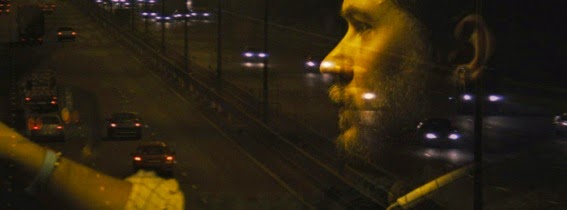
When we meet Ivan Locke (played by Tom Hardy sporting a stylish beard and Welsh accent) he is entering his car at the end of a work day and the movie ends before he leaves it. This is Locke’s main conceit: the only location is Locke’s BMW, the only face we see is Hardy’s. It is a (literally) theatrical experiment on the part of Knight and the effortlessly versatile Hardy that is immensely satisfying to behold.

Locke is a construction foreman and a careful man. He obeys the speed limit and is precise in his work. Yet as he drives across town before the birth of his child, phone-call by phone-call, his life begins to unravel. Watching Tom Hardy act opposite abstract voices it is almost tragic to recall The Dark Knight Rises in which nearly all of his expressive face was masked. It is unlikely that Hardy will win any awards for this performance if only because of how effortless it seems. Through heated calls and Shakespearean monologues, Locke’s voice, and Hardy’s prowess, is unwavering.
And yet, tense and flawlessly executed as Knight’s film is, something seems missing. Some might call it an intentional anticlimax but the problem with filming with such a specific, heightened structure (think Nolan’s Memento which takes place in reverse chronological order) when the lights come up that’s all you have.

Like a pregnancy complication that can change an umbilical cord from a lifeline to a noose, the problem with such a self-contained format, regardless of how flawlessly executed, is it is always simultaneously safe and constricting. A dichotomous condition indeed.

Shadows in the Valley: A Roger Deakins Supercut

Roger Ebert once said that to simply watch the visuals of a Martin Scorsese film would be just as effective as the experience of the standard audio/visual combination. The same could be said of any film shot by master cinematographer Roger Deakins. From the white-washed landscapes in Fargo to the dazzling palette of Skyfall, few of contemporary cinema’s most iconic shots would exist were it not for Deakins. Enjoy, as I did, this supercut of some of his best work (after the break, courtesy of Plot Point Productions) and stay tuned for my review of Steven Knight’s Locke coming soon!

A Preemptive Obit for Rian Johnson: Slain by Disney

Rian Johnson is reportedly set to write and direct Disney’s Star Wars: Episode VIII. Hit the jump for my thoughts.

The maxim of contemporary entertainment states that TV is the new cinema. If this is true it is because of the steady decline in momentum within the film industry after the golden age of the 1970s. There are still a handful of talented, seemingly passionate, filmmakers working today (we’ll get to one in particular) but overall it seems the studio system and the general ease of modern production have led to lackadaisical filmmaking both within and without the major studios.
All of the above negativity is what made watching anything from Rian Johnson’s flawless (albeit brief, to-date) filmography such a pleasure. It is exciting to watch one of Johnson’s films because it feels like he is excited to make them. His three features—Brick, The Brothers Bloom, and Looper—all have a lot in common: they’re genre pieces, they feature (to some extent) Joseph Gordon Levitt, and, most importantly, they are completely immersed in the worlds Johnson places them in. From visual style to dialogue, every piece fits into the larger picture that is inevitably a fun and fulfilling film.

All of the above positivity is why I was less than enthused when I read the news that Johnson would be directing Disney’s Star Wars: Episode VIII. Admittedly, Johnson is a perfect fit for the film: he’s proved he can make a fresh, engaging sci-fi film, he has worked incredibly well with young actors, and even the energy and enthusiasm that runs through his work is reminiscent of early Lucas or Spielberg. And yet, I can’t help feeling that Johnson shouldn’t waste his time with Disney’s Star Wars.
It’s a selfish notion on this writer’s part to suggest that a talented, independent filmmaker should forego one of the largest, most successful franchises in the history of film. Yes, Johnson will presumably get a big paycheck but he’ll also get insane international recognition and resources that he may not have been able to afford before. But Disney doesn’t need him. JJ Abrams has been a derivative Spielberg Jr for years now but Johnson seemingly still has decades of independent, creative energy in him. Disney, the great studio parasite, could easily latch onto that and never let go. Or at least not until they’ve made their money or Johnson loses steam. The sad truth is that too many great filmmakers went through the shiny doors of Big Studio and were never seen or heard from again.

Star Wars is important to me. It represents the adventurous naiveté of childhood—of my childhood. Rian Johnson’s films recall that same fantastical fervor. But George Lucas, the Star Wars franchise, and Disney, for that matter, gave up on making meaningful content a long time ago.
To Disney: Please don’t destroy one of my favorite directors. He’s too good for you.

To Rian Johnson: I hope you somehow breathe new, creative life into cinema’s most tired and uninteresting franchise. You just became the leader of a rebellion that the rest of us gave up fighting years ago. As it stands, you’re our only hope.

Felix Van Groeningen’s “The Broken Circle Breakdown”

“Time is a flat circle.” The infamous phrase courtesy of Matthew McConaughey’s nihilistic Rust Cohle in HBO’s True Detective, like the show itself, failed to resonate with audiences as anything more than pop-culture fodder. Cohle’s metaphysical musing find a fitting (and much more engaging) partner in Felix Van Groeningen’s Oscar-nominated film The Broken Circle Breakdown. Compelling, warm, and textured, the film is everything True Detective was not—and then some.

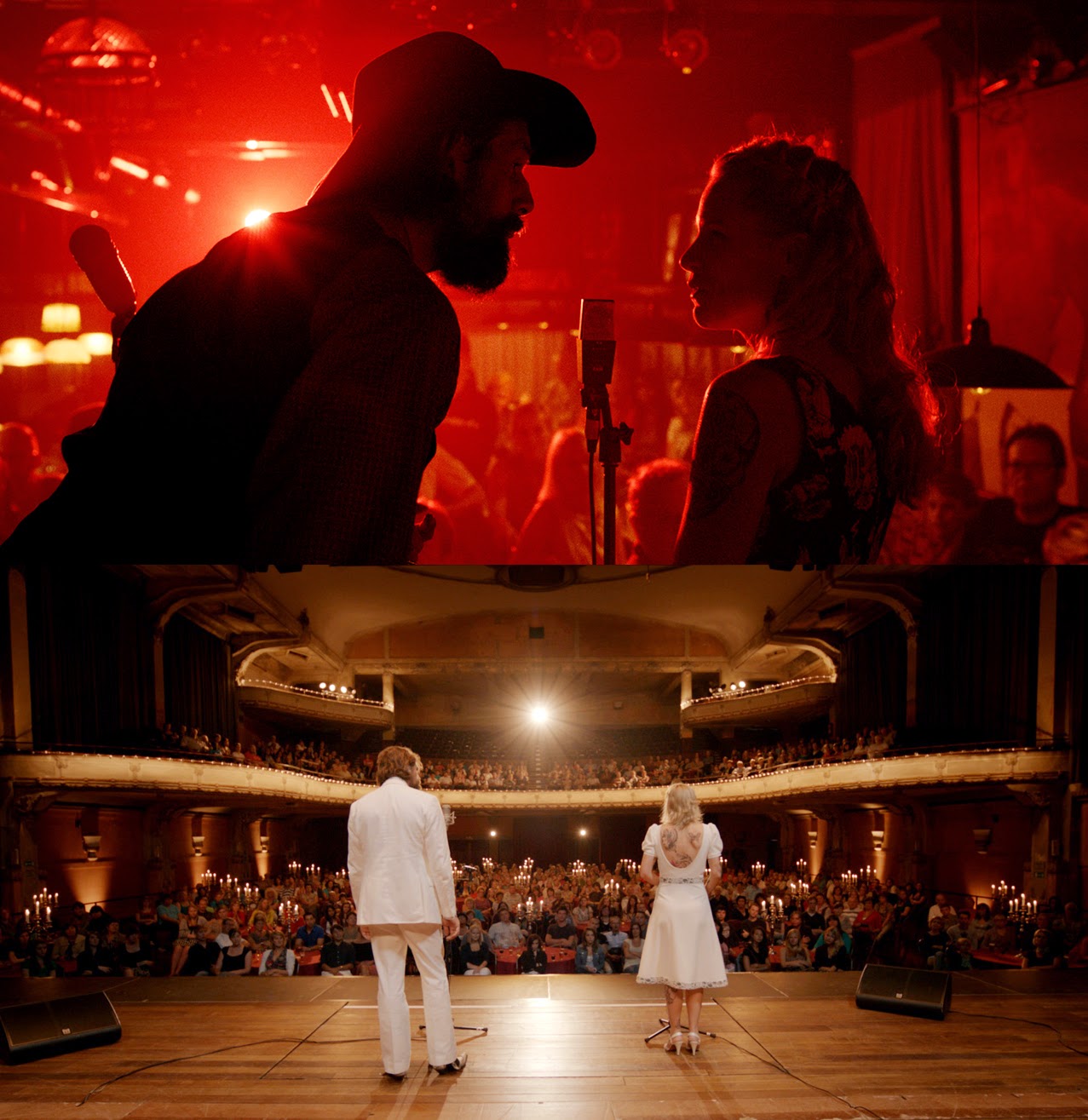
“Will the circle be unbroken/By and by, by and by/Is a better home awaiting/In the sky, in the sky?” The musical number that opens Goeningen’s Bluegrass-marriage drama sets the scene both sonically and thematically for all of the aptly-titled film. Sliding back and forth through time we meet Didier (Johan Heldenbergh): a passionate Bluegrass musician who dreams of America—the land of second chances—and his lover Elise (Veerle Baetens): a free-spirited tattoo artist who boldly tells her life-story through the ink in her skin. We see them court, fall in love, get married, have a kid, suffer losses, and fall out of love. Though never in that exact order.
Beautiful, bittersweet, and melodic though it may be, the cross critics (perhaps unappreciative of the many Bluegrass interludes in the film) could easily point out some of Breakdown’s more glaring contradictions. Didier romantically describes America as the place where anyone can find a second chance yet we quickly find that he does not really believe in second chances at all. Didier believes life is one singular chance and for that reason you must fight for what you have and what you love. If any character should be waxing about second chances it is Elise. She lives with an air of impulsive impermanence. Quickly covering her body in the names of her lovers only to cover them up if it doesn’t work out. Anything can be covered up and changed. One can always move on. The understanding viewer will surely see these contradictions as part of what make these characters seem so fully human.

Many parallels can be drawn to Derek Cianfrance’s 2010 filmBlue Valentine starring Ryan Gosling and Michelle Williams. Bluegrass and Belgian setting aside, the two movies tell a similar story in a similar way. Yet somehow Heldenbergh and Baetens make Breakdown feel larger. Sure, there is more spectacle, more mysticism in Groeningen’s direction but that isn’t all. Baetens (who won multiple awards for her chameleonic performance) would outshine both Gosling and Williams combined who, in comparison, seem more like children acting out than complex adults. Even if that is only a result of the darker subject matter that Breakdown occasionally reaches for through its unchronological conquest.
In many ways, Breakdown answers its own question regarding the fateful circle. Afterall, the film is not called “The Circle” or “Will The Circle Be Unbroken?” We are aware from the outset that things will indeed fall apart. The nonsequential narrative structure only emphasizes this. Yet the film never feels like Rust Cohle’s existential funeral dirge of Time as a flat circle. Rather, we find that the circle urges us to press forward. Even when the stage is too large and the performance no longer feels intimate, the song must play on. In this way, the much less pessimistic words of Walt Whitman’s Leaves of Grass come to mind:  “All goes onward and outward, nothing collapses, And to die is different from what any one supposed, and luckier.”
An American dream if there ever was one. Didier would approve—as long as the leaves of grass are blue.